Frequently Asked Questions
What is EPPA (Employee Polygraph Protection Act)?
What about Voice Stress versus Polygraph?
Are polygraph results admissible in court?
What is the minimum age for a polygraph examination?
Are the results and information confidential?
How quickly are results available?
How quickly can I schedule an examination?
How much does a polygraph examination cost?
Are all your polygraph examiners state licensed and qualified?
What is a typical polygraph examination like and is there a limit to the number of test questions?
Who uses polygraph examinations?
Q. What is EPPA (Employee Polygraph Protection Act)?
On December 27, 1988, the Employee Polygraph Protection Act (EPPA) became law. This federal law established guidelines for polygraph testing and imposed certain types of restrictions on most private companies and employers in regards to testing their employees. This legislation only affects commercial businesses. Local, State and Federal governmental agencies (such as police departments) are not affected by the law, nor are public agencies, such as a school system or correctional institution. In addition, there are exemptions in EPPA for some commercial businesses as follows:
- Companies under contract with the federal government
- Companies which manufacturer, distribute or dispense controlled substances
- Armored Car or Alarm and Security Companies
- Nuclear or Electrical Power Plants
- Public Water Works
- Toxic Waste Disposal
All other commercial companies and businesses can request a current employee to take a polygraph examination or suggest to such a person that a polygraph examination be taken, only when specific conditions have been satisfied. However, the employer cannot require current employees to take an examination, and if an employee refuses a request or suggestion, the employer cannot discipline or discharge the employee based on the refusal to submit to the examination. Central Polygraph Service Limited is furnishing the following information, which it believes is in good faith, and conforms with the Department of Labor’s Regulations relating to polygraph tests for employees. This information is considered only as a guideline to assist in complying with the Act and Regulations, and Central Polygraph Service Limited is disclaiming any liability in connection therewith:
Checklist for Companies and Employers:
- The incident must be an ongoing, specific investigation.
- It must be an identifiable economic loss to the employer.
- Obtain a copy of the Employer Polygraph Protection Act of 1988.
- Provide the employee with a written statement that includes:
a. Identification of the company and location of employee
b. Description of the loss or activity under investigation
c. Location of the loss
d. Specific amount of the loss
e. Type of economic loss
f. How the employee had access to the loss
Note: access alone is not sufficient grounds for polygraph testing
g. what kind of reasonable suspicion there is to suspect the employee of being involved in the loss. - The Statement provided to employee MUST be signed by someone other than the polygraph examiner, who is authorized to legally bind the employee, and MUST be retained by the employer for at least 3 years.
- Read the Notice to Examinee to the employee, which should be signed, timed, dated and witnessed.
- Provide the employee with 48 hours advanced notice (not counting weekends or holidays) to the date and time of the scheduled polygraph test.
- Provide employee with written notice of the date, time and location of the polygraph test, including written directions if the test is to be conducted at a location other than at the place of employment.
- Maintain a statement of adverse actions taken against the employee following a polygraph test.
- Conduct an additional interview of employee prior to any adverse action following a polygraph test.
- Maintain records of ALL of the above for a minimum of 3 years.
- Employees may not waive their rights.
- Use your company letterhead on all forms you provide to the employee. Have your corporate attorney review your actions to assure your compliance of EPPA.
Please download our Employee Theft EPPA Packet here.
Q. What about Voice Stress versus Polygraph?
The United States Department of Defense has stated based on extensive research that the preponderance of scientific evidence clearly demonstrates the Polygraph is far more accurate at detecting deception than is Voice Stress. No Department of Defense Agency uses Voice Stress. The Virginia State legislature has disallowed the use of Voice Stress. Polygraph is the only lie detection technique directly used by Federal Government Agencies. Please view additional information here.
Q. Are polygraph results admissible in court?
Polygraph results are admissible in some federal circuit courts and some states. More often, polygraph results are admissible when the parties have agreed to their admissibility under terms of a stipulation. A reference sheet of court cases may be downloaded here.
Q. What is the minimum age for a polygraph examination?
A person taking a polygraph test must be 13 years of age or older at the time of the actual polygraph test. Examinees under 18 years of age at the time of the actual polygraph test must have a parent or legal guardian complete and sign our Parental Consent Form. The form may be downloaded here.
Q. Are the results and information confidential?
Central Polygraph Service adheres to very strict confidentiality and privacy standards. All information from an examination is kept strictly confidential and private. All information is encrypted and stored at a secure off-site facility for maximum security.
Q. How quickly are results available?
Results are provided verbally following the examination in office. If requested, official embossed written presentation reports of the examination results will be produced and sent via USPS Priority Mail with Signature Confirmation in a tamper-proof envelope with an average arrival time of between 2 to 3 days following the examination. In certain cases, official reports can be produced immediately following the examination and provided to the client and or examinee.
Q. How quickly can I schedule an examination?
Depending on availability, appointments for polygraph examinations can usually be accommodated with short notice. Please call 847-919-0027 or 1-877-765-9872 to schedule an examination or you may use our secure online scheduling system by clicking here.
Q. How much does a polygraph examination cost?
The standard flat-rate all inclusive polygraph test fee is $550 dollars per test. A non-refundable deposit of $100 is required when scheduling an appointment for a polygraph test. Cancellations received less than 48 hours prior to the actual polygraph appointment test date and time, no-shows, arriving late to the scheduled appointment time or missed appointments for any reason incur the full $550 cancellation fee. Please note that the forty eight hour cancellation policy is strictly enforced and still applies even for polygraph appointments that are scheduled immediately for the same or very next day which are then subsequently cancelled by the client for any reason. No further services and or consultations of any kind are included in the polygraph test fee following the conclusion of a polygraph test and the providing of the test results. For multiple tests, government and therapist related testing fees, please speak to a representative for further information.
Q. Are all your polygraph examiners state licensed and qualified?
Yes, all our examiners have completed graduate level Forensic Psychophysiology programs and are state licensed polygraph examiners who receive many hours of continuing education on an annual basis. In addition, all our examiners are full members in good standing of the American Polygraph Association, the American Association of Police Polygraphists and the Illinois Polygraph Society. In addition, our examiner are also Certified Fraud Examiners and Court Certified Expert Witnesses in Polygraph.
Q. What is a typical polygraph examination like and is there a limit to the number of test questions?
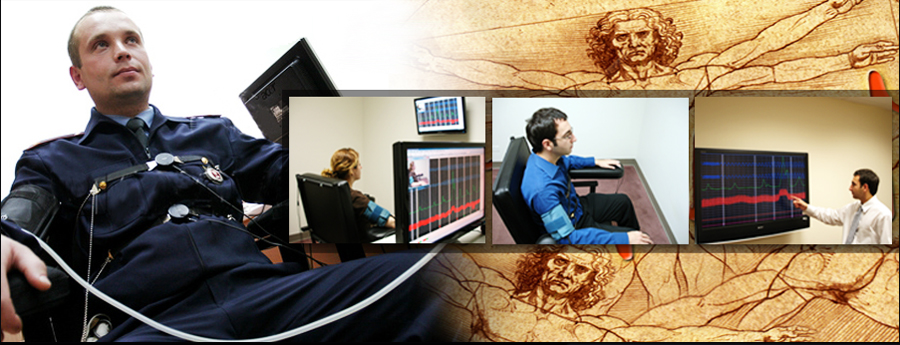
Central Polygraph Service utilizes state-of-the-art digital polygraph systems and conducts polygraph examinations according to strict standards and methods as approved and accepted by the American Polygraph Association and the U.S. Federal Government. A typical polygraph examination is divided into three parts and includes a period referred to as a pre-test, the actual polygraph test and a post-test data analysis phase. In the pre-test, the examiner completes required paperwork and talks with the examinee about the polygraph test. During this period, the examiner will discuss all the questions to be asked and familiarize the examinee with the entire testing procedure, process and equipment. During the actual-test, the examiner will administer and collect a number of digital polygraph charts. Following the actual polygraph test, the examiner will analyze the digital polygraph charts and render an opinion as to the truthfulness of the person taking the test and issue an official report with the results. Due to established laws and blood pressure cuff time limits, there is a strict limit of up to (4) pertinent test questions that may be established by the client for each polygraph examination (all other questions on the polygraph test are generic in nature and are established by the examiner for baseline purposes). The four pertinent test questions are usually established along with our examiners before the actual polygraph test date and time either via e-mail or using our online submission form on our web site – only once an appointment slot has been reserved and confirmed.
Q. Who uses polygraph examinations?
Three sectors of society use polygraph examinations for various reasons and purposes.
Private Sector
Individuals, Families, Therapists and Employers use polygraph examinations to verify statements and find out the truth on a variety of issues including infidelity, drug use, addictions, sex offenses, employee theft, criminal activities, abuse and all other matters.
Legal Community
Law Firms and Attorneys use polygraph examinations in the pre-court phase and in civil litigation to determine truth in a client’s case, verify a client’s truthfulness relative to a plea negotiation, to assist in general client control and verification of witness statements. Law courts also mandate polygraph examinations on a regular basis for post convicted sex offenders. In addition, U.S. Attorney Offices, District Attorney Offices, Public Defender Offices, Defense Attorneys and Parole & Probation Departments all use polygraph examinations.
Law Enforcement, Federal Agencies, Military and Government
Local Police, U.S. Military Branches and Government Agencies such as the FBI, CIA, NSA and Department of Defense all use polygraph examinations for applicant screenings, criminal investigations and matters of national security.