How Polygraph Works
The term “polygraph” literally means “many writings”. In 1917, the first polygraph examination was used for counterintelligence work during World War I. The FBI began using polygraph examinations in 1938. Polygraph systems and research have advanced dramatically throughout the last 70 years and in 1986 the introduction of computerized polygraph systems began which has led to today’s advanced digital state-of-the-art systems.
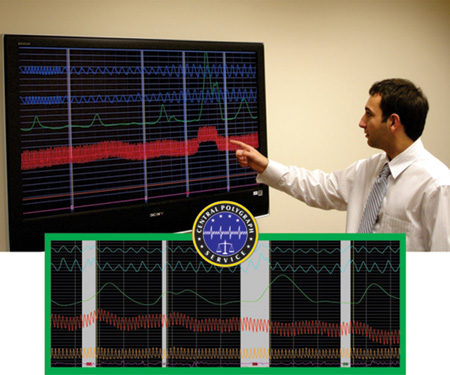
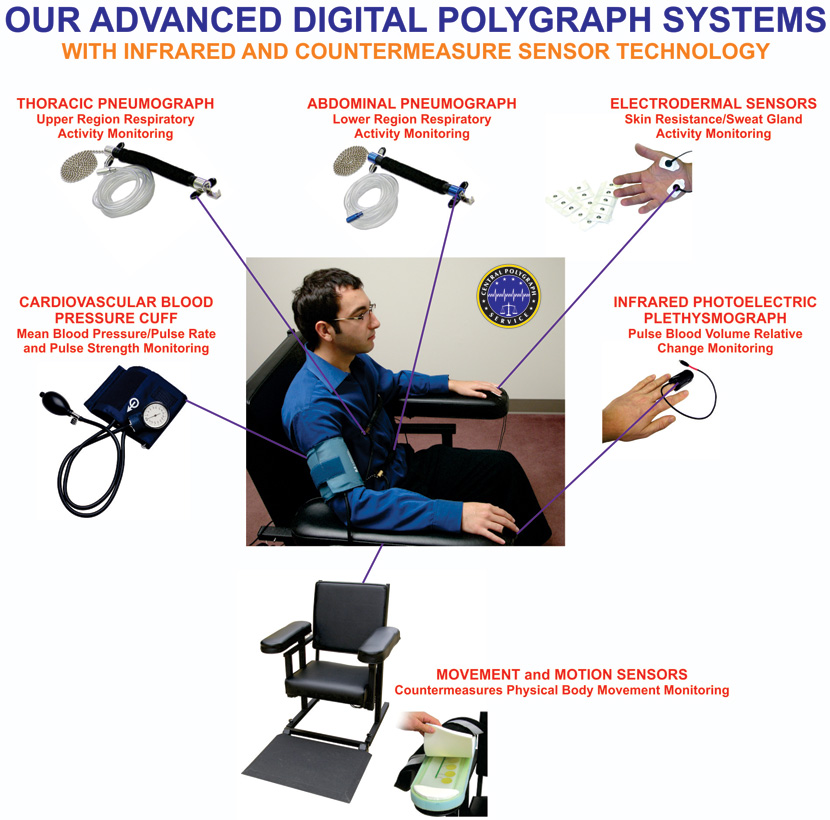
The name refers to the manner in which selected physiological variables are simultaneously recorded. Using specialized components, a typical polygraph collects physiological data from numerous signals generated from the human body. Respiratory activity is recorded by two convoluted rubber tubes called Pneumographs that are placed over the examinee’s chest and abdominal areas. Electrodermal or sweat gland activity is recorded by two small sensors attached to the fingers. Cardiovascular activity is recorded by a blood pressure cuff or similar device. In addition, Central Polygraph Service utilizes new Infrared Plethysmographs for monitoring pulse blood volume relative change and special movement and motion sensors to detect countermeasure and physical body movements during an examination.
Together, these variables provide continual data regarding an individual’s sympathetic and parasympathetic nervous system which are part of the autonomic division of the peripheral nervous system which controls physiological actions and reactions. A typical polygraph examination is divided into three parts and includes a period referred to as a pre-test, the actual polygraph test and a post-test data analysis phase. In the pre-test, the examiner completes required paperwork and talks with the examinee about the polygraph test. During this period, the examiner will discuss all the questions to be asked and familiarize the examinee with the entire testing procedure, process and equipment. During the actual-test, the examiner will administer and collect a number of digital polygraph charts. Following the actual polygraph test, the examiner will analyze the digital polygraph charts and render an opinion as to the truthfulness of the person taking the test and issue an official report with the results.